
A Day of Fear and Hope

Estimated reading time: 10 minutes, 30 seconds
April 2, 2021, The Day
I Almost Lost Jan!

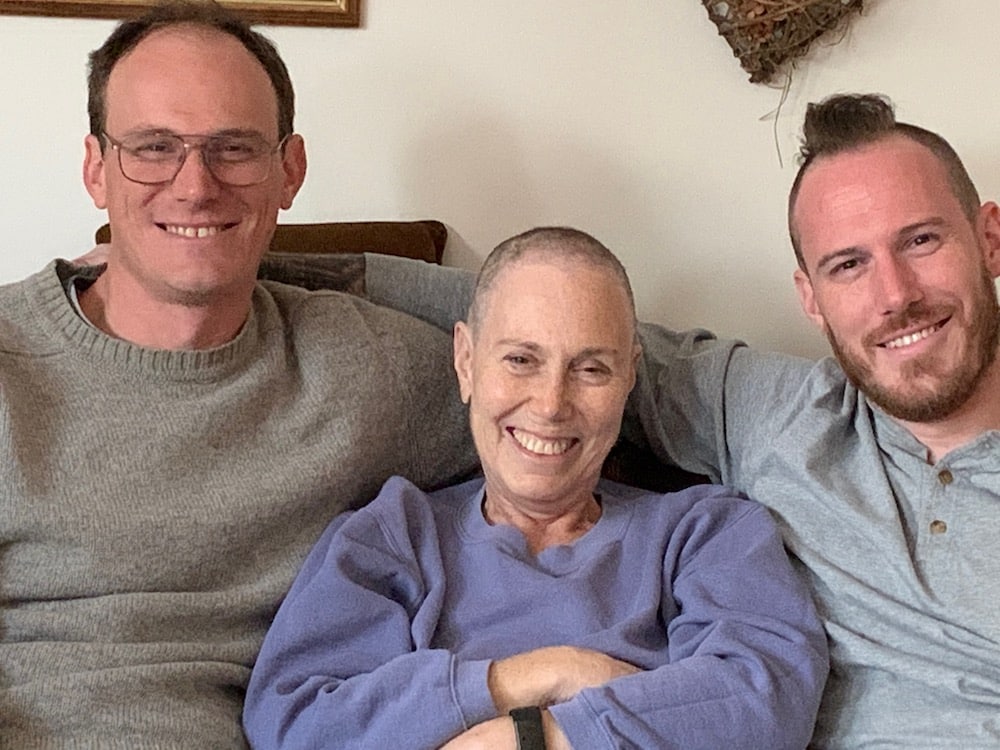
Following numerous sleepless nights, I experienced an overwhelming sense of mental and physical exhaustion. My body was weary, and I could not provide my wife, Jan, with the necessary assistance to get to the bathroom. The constant strain had also left my back in excruciating pain. Although the county police had been kind enough to aid us overnight, Jan was reluctant to seek help from our son, Mike. Faced with no other option, I took the initiative to contact Mike without seeking Jan’s approval.

When Mike and Elyssa arrived, they immediately expressed concern for their mother’s well-being. “Mom, are you okay? We’re here to help you,” they said in unison. I quickly fetched a wooden chair with no-scrape patches nearby, as the physical therapist had previously used it for exercises. This chair might be helpful for you to get to the toilet,” I suggested to their mother, hoping to provide some comfort and assistance during this difficult time.
They helped her into the chair and smoothly glided across the polished wooden floor like an iceboat. “Her urine is full of blood,” Mike said. 

As Elyssa desperately needed assistance, I quickly informed her that the visiting nurse was scheduled to arrive in a few hours. However, she could not wait that long and exclaimed, “We need her now.” Without wasting any time, I handed her my iPhone and showed her the number for the visiting nurse. Elyssa swiftly stepped into the hallway to make the call, her face etched with worry and anxiety.

As I winced in pain, I received some good news: the Visiting Nurse was on her way. Even though she had an appointment, she rescheduled it so she could come immediately. I expressed my gratitude to Elyssa and gently rubbed my aching back. She asked if I wanted to sit down, but I mustered the courage to refuse and attempted to alleviate the discomfort by taking a few steps.

Mike rushed downstairs to answer the door as my iPhone rang through the house. It was the visiting nurse who was here to check on my health. “Ms. Lilien, let me take your vitals,” she said. As she worked, I felt a sudden, alarming tightness in my chest, causing me to gasp for air. For a moment, it seemed as if my very breathing had stopped.

As the nurse relayed Jan’s vital signs, her voice was urgent. “The patient’s blood pressure is dangerously low at 70 over 40, and her temperature is above 100 degrees Fahrenheit. Additionally, there is visible blood in her urine, indicating internal bleeding. Given these concerning symptoms, she must be hospitalized immediately to receive prompt medical attention.”

I reached for my iPhone urgently, knowing I had to contact her Oncologist immediately. With trembling fingers, I dialed his number and waited anxiously for him to answer. To my relief, Dr. Strair picked up on the first ring, and I immediately placed him on speakerphone. As I gave him a summary of the situation, the nurse provided the necessary details calmly and professionally, her voice steady despite the gravity of the situation. Together, we worked to ensure that Jan received the care she urgently required.

Dr. Strair‘s question was like a sudden bolt of lightning that illuminated the room. His words hung heavily in the air, punctuated by my racing heartbeat. “I agree she should go to the hospital,” he said, “but do you know what is in her advanced directive? You should read it and know what to do, as you might need to use it.” His tone was severe, and I could sense the gravity of the situation. My body shook uncontrollably as he spoke like an earthquake had torn our apartment. The thought of losing Jan, my everything, was almost too much to bear.

The nurse requested an ambulance. “Jan, going to the hospital is necessary,” Elyssa assured her.

Overlook Hospital

As we pulled into the hospital’s parking deck, I thanked Mike for driving me. I then requested his help reaching out to my family and friends, explaining that I couldn’t make the calls myself. “Can you and Jon make the calls? I can text you all the necessary details,” I asked. Mike kindly agreed, and I felt relieved knowing that my loved ones would be notified of my situation.
“Only one of you can stay,” said the triage nurse. Mike and Elyssa hugged me and left. I paced the narrow hallway, having not slept in forty hours. 

“I wasn’t aware that she had COVID,” said the triage nurse. “I’m sorry, but you cannot stay here.” 

“It’s important that you call Dr. Strair,” I said as I quickly jotted down his name and phone number on paper.

“Don’t worry. I’ll contact the doctor immediately,” the nurse replied.

“What about the bag that I brought with me?” I asked.

“I’ll make sure to deliver it to her,” assured the nurse.

I stumbled out of the emergency room and sent a text message to my sons, informing them that I could not stay with her. I was worried if I would ever see her again. 

After getting into the car, I called Rabbi Renee. Through my tears, I told her that Jan was in the ER and that she was very sick. The Rabbi asked for more information about what had happened, and I updated her as best as possible.

She assured me that she would update everyone at services that night and asked if there was anything she could do to help. I replied that I just needed Jan to stay alive and that any prayers for her recovery would be greatly appreciated.

As Jan’s Prius glided smoothly towards our home, I couldn’t help but feel a sense of relief that my wife was safe and unscathed. However, my mind was still preoccupied with the thought that I had almost lost Jan by delaying my call for help from my son. Our marriage had always been based on equality, but I now realized that my reluctance to take charge had almost cost us dearly.

I couldn’t help but think of the pizza dough I had seen tossed into the air earlier in the week. It was a perfect analogy to how I had been indecisive, unsure of what to do, and had let the situation spiral out of control. I had waited too long, not wanting to be seen as a man who made decisions for his wife, but in the end, it almost resulted in a tragedy.

Sitting in the passenger seat, I pondered my actions and inactions. I knew I had made a mistake by not calling for help earlier, but I also knew I had learned from my mistake. I had to be more decisive and proactive and not let my pride get in the way of doing what was right. Next time, I would know what to do and be ready to take charge if the situation demanded it.

After parking the car, I messaged my sons, family, and close friends to inform them of the situation.

Jan is currently at Overlook Hospital, and I just spoke to the emergency room physician. According to him, she is in critical condition with a blood pressure reading of 70 over 40 and a temperature of 100. Due to her ongoing battle with Covid, I could not stay with her. She will be admitted to the ICU, and I will keep you updated on her condition as I receive more information. 

Friday, April 2, 4 PM

Pages: 1 2

3 comments add your comment

Share your thoughts and ideas

This site uses Akismet to reduce spam. Learn how your comment data is processed.

Previous Post:

Next Post:

The Jan Lilien Education Fund!

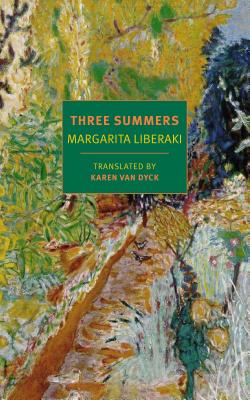
Three Summers

Read: February 2025

Get this book

Three Summers: A Novel

by Margarita Liberaki

Today, I began reading Margarita Liberaki‘s Three Summers, translated by Karen Van Dyck. This edition features a detailed introduction by Ms. Van Dyck, in which she shares her experiences meeting Ms. Liberaki and collaborating with her on the translation. The original novel, written in Greek, was titled The Straw Hats, but Ms. Van Dyck felt that this title would not resonate with foreign readers similarly.

Three Summers is the story of three sisters who grew up in the countryside near Athens before the outbreak of the Second World War. The sisters live in a large, old house surrounded by a beautiful garden. The oldest sister, Maria, is adventurous and eager to settle down and start her own family. The middle sister, Infanta, is gorgeous but emotionally distant. Katerina, the narrator, and the youngest sister is dreamy and rebellious.

Throughout three summers, the sisters share and keep secrets, fall in and out of love, and try to understand their parents and other adult figures. They also observe the peculiar behaviors of friends and neighbors while worrying about and discovering their identities. Karen Van Dyck’s translation beautifully captures the light and warmth of this modern Greek classic.

Margarita Liberaki (1919-2001) was born in Athens and raised by her grandparents, who owned the Fexis bookstore and publishing house. In addition to her novel Three Summers, she authored The Other Alexander (1950) and The Mystery (1976). She also wrote several plays, including Candaules’ Wife (1955) and The Danaïds (1956), part of a cycle she called Mythical Theater. Furthermore, she contributed screenplays, such as Jules Dassin’s Phaedra (1962) and Diaspora (1999), which focused on Greek intellectuals in exile in Paris during the junta. Her novel Three Summers is now a standard part of public education in Greece and Cyprus and was adapted into a television miniseries in 1995.

Karen Van Dyck is the Kimon A. Doukas Professor of Modern Greek Literature at Columbia University. Her research focuses on modern Greek literature, diaspora literature, gender studies, and translation. She has edited or co-edited several poetry anthologies, including A Century of Greek Poetry (2004), The Greek Poets: Homer to the Present (2010), and Austerity Measures: The New Greek Poetry (2017) for NYRB Poets. Additionally, her translations have appeared in Brooklyn Rail, Asymptote, and The Baffler.


When you purchase a book through one of my links, I earn a small commission that helps support my passion for reading. This contribution allows me to buy even more books to share with you, creating an incredible cycle of discovering great reads together! Your support truly makes a difference!


×
The Hero of This Book: A Novel

Read: November 2022

Get this book

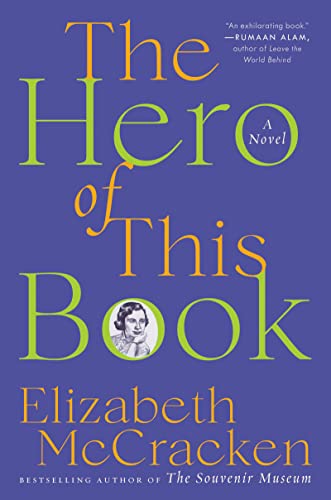
The Hero of This Book: A Novel

by Elizabeth McCracken

The Hero of This Book: A Novel by Elizabeth McCracken is a searing examination of grief and renewal and a deeply felt relationship between a child and her parents. It is not a memoir but a remembrance of those we have lost. Ten months after her mother’s death, the narrator of The Hero of This Book takes a trip to London. The city was a favorite of her mother’s, and as the narrator wanders the streets, she reflects on her mother’s life and their relationship.

Thoughts of the past meld with questions of the future: Back in New England, the family home is now up for sale, its considerable contents already winnowed.

The following quote resonated with me.

I’ve always hated the notion, in life or in fiction, that the human personality is a puzzle to be solved, that we are a single flashback away from understanding why this person is cruel to her children, why that man has a dreamy, downcast look. A human being is not a lock and the past is not a key.

I highly recommend this book.

The Goodreads summary provides an overview,

The woman, a writer, recalls all that made her complicated mother extraordinary–her brilliant wit, her generosity, her unbelievable obstinacy, her sheer will to seize life despite physical difficulties–and finds herself wondering how her mother had endured. Even though she wants to respect her mother’s nearly pathological sense of privacy, the woman must come to terms with whether making a chronicle of this remarkable life constitutes an act of love or betrayal.

The Hero of This Book is a searing examination of grief and renewal and a deeply felt relationship between a child and her parents. What begins as a question of filial devotion ultimately becomes a lesson in what it means to write. At once comic and heartbreaking, with prose that delights at every turn, this is a novel of such piercing love and tenderness that we are reminded that art is what remains when all else falls away.


The Jan Lilien Education Fund sponsors ongoing sustainability and environmental awareness programs. Gifts made this month; I will match dollar-for-dollar. All donations are tax-deductible.

Subscribe

Contact Us

I receive a commission when you buy a book or product using a link on this page. Thank you for supporting Sharing Jan’s Love blog.

×
Happiness Falls: A Novel

Read: September 2023

Get this book

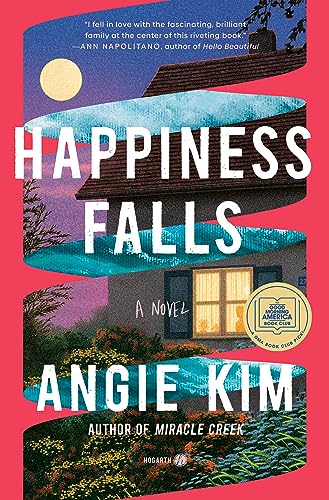
Happiness Falls: A Novel

by Angie Kim

I highly recommend reading Happiness Falls, a book authored by Angie Kim. The story is about a family’s search for their missing father, which leads them to question their beliefs and relationships. The award-winning author of Miracle Creek writes this thrilling and emotionally profound book.

We didn’t call the police right away.” These are the first words of an extraordinary novel about a biracial Korean-American family in Virginia whose lives are upended when their beloved father and husband go missing.

Mia, the irreverent, hyper-analytical twenty-year-old daughter, has an explanation for everything—which is why she isn’t initially concerned when her father and younger brother Eugene don’t return from a walk in a nearby park. They must have lost their phone and or stopped for an errand somewhere. But by the time Mia’s brother runs through the front door bloody and alone, it becomes clear that the father in this tight-knit family is missing, and the only witness is Eugene, who has the rare genetic condition Angelman syndrome and cannot speak.

Happiness Falls is a gripping investigation that centers around a father’s disappearance and the intricate dynamics of his family. As the clock ticks, the family’s deepest secrets come to light, raising questions about love, communication, and the human experience. This novel is a thrilling blend of mystery, drama, and philosophical exploration, showcasing Angie Kim’s remarkable storytelling skills that garnered her numerous accolades for her debut novel, Miracle Creek. Through the family’s journey, Kim offers a fresh perspective on the missing person story, creating a memorable tale of a family that goes to great lengths to understand each other.


The Jan Lilien Education Fund sponsors ongoing sustainability and environmental awareness programs. Gifts made this month; I will match dollar-for-dollar. All donations are tax-deductible.

Subscribe

Contact Us

I receive a commission when you buy a book or product using a link on this page. Thank you for supporting Sharing Jan’s Love blog.


×
Daughter: A Novel

Read: September 2023

Get this book

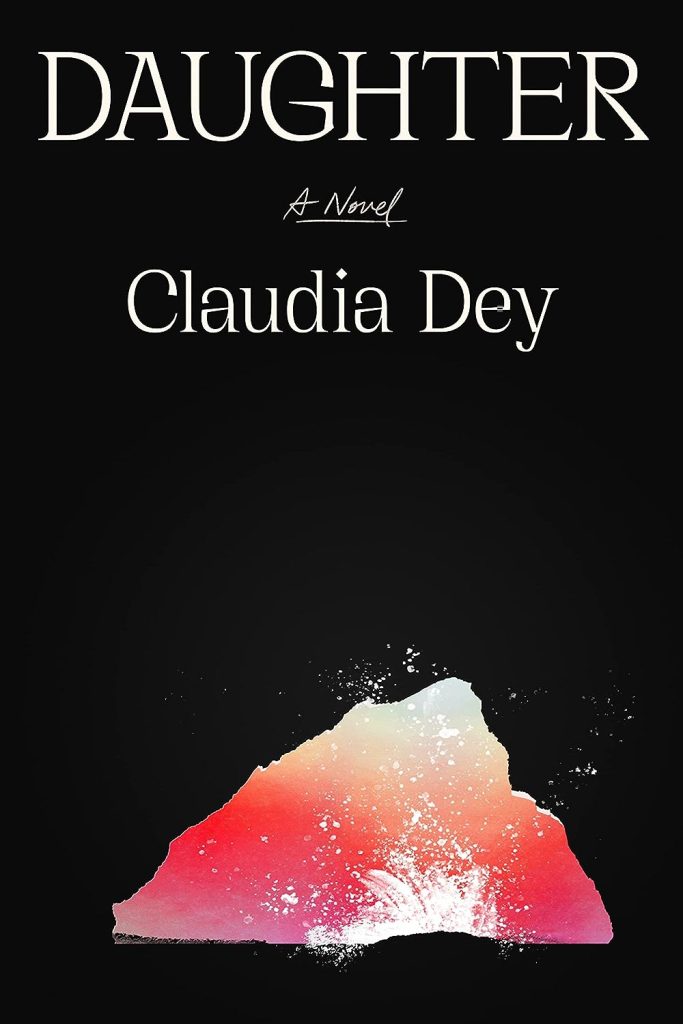
Daughter: A Novel

by Claudia Dey

I started reading “Daughter: A Novel” by Claudia Dey today. According to Mona Dean, to be loved by your father is to be loved by God. Mona is a playwright, actress, and daughter of a man who is famous for a great novel. However, her father’s needs and insecurities significantly impact the women in his family, including Mona, her sister, her half-sister, and their mothers.

Mona’s father’s infidelity shattered her childhood, causing her to be in opposition to her stepmother, who also suffered from his actions. Mona’s father begins a new affair, and he confides in her. She enjoys his attention painfully and parasitically. When he confesses to his wife, Mona is blamed for the disruption, punished for her father’s actions, and kicked out of the family.

Mona’s life is chaotic, and she struggles to regain stability. Only when she experiences a profound and defining loss does she begin to replace absent love with real love? Pushed to the brink, she must decide how she wants to live, what Mona needs to say, and the risks she’s willing to take to say it.

Claudia Dey provides penetrating insight and devilish humor to chronicle our most intimate lives in “Daughter.” It’s an obsessive and blazing examination of the forces that drive us to become, create, and break free.

×
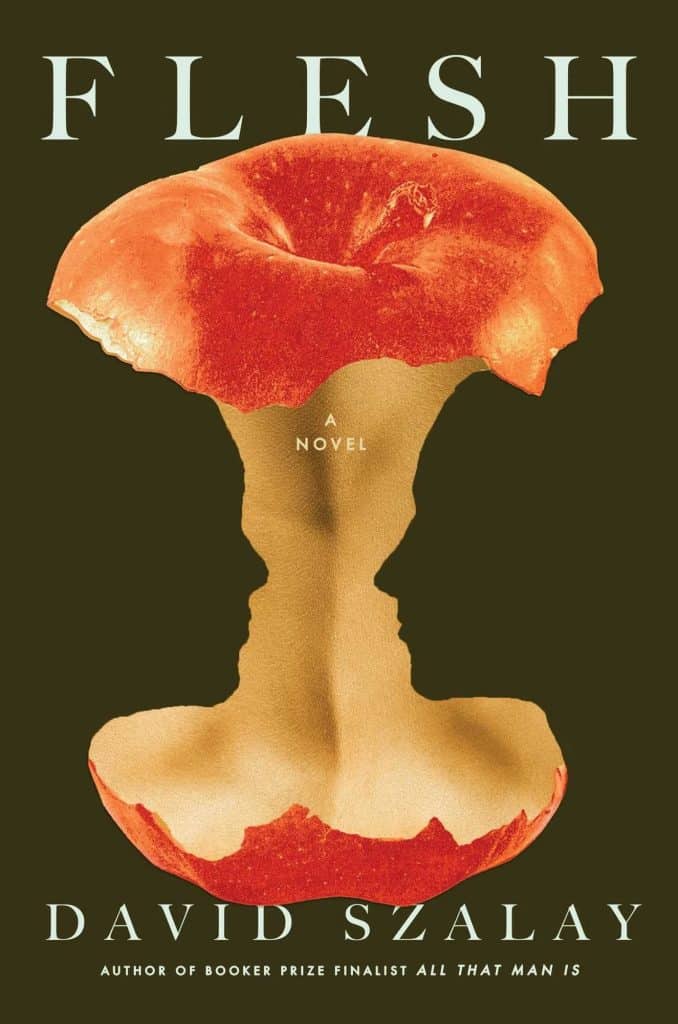
Flesh

Read: May 2025

Get this book

Flesh: A Novel

by David Szalay

David Szalay, a finalist for the Booker Prize, has written a gripping and mesmerizing novel, Flesh, which follows a man whose life is turned upside down by events beyond his control. Concise and thought-provoking, Flesh delves into the subtle yet lasting effects of unresolved trauma amid the instability and violence of an increasingly globalized Europe. The novel offers sharp insights, unwavering emotional depth, and a remarkable portrayal of humanity.

Teenaged István lives with his mother in a quiet apartment complex in Hungary. Shy and new to the area, he struggles to engage with the social rituals of his classmates and soon becomes isolated. His only companion is his neighbor, a married woman of a similar age to his mother, whom he begrudgingly assists with errands. As their periodic encounters evolve into a clandestine relationship that István can barely comprehend, his life spirals out of control, culminating in a violent accident that results in a man’s death.

A tumultuous journey unfolds as István emigrates from Hungary to London, navigating a series of jobs before securing steady employment as a driver for London’s affluent elite. At each stage, his life is influenced by the goodwill or self-interest of strangers. Throughout it all, István remains a calm, detached observer of his existence. Through his perspective, we experience a tragic twist on the immigrant “success story,” lit by moments of sensitivity, softness, and Szalay’s keen observations.

Fast-paced and immersive, Flesh reveals István’s life through intimate moments with lovers, employers, and family members, charting his experiences over several decades. As the story unfolds, the tension between what is seen and unseen, and what can and cannot be expressed, intensifies until, ultimately, a sudden tragedy jeopardizes István’s life yet again.


David Szalay is the author of Turbulence, London and the South-East, and All That Man Is. He has been awarded the Gordon Burn Prize and the Paris Review Plimpton Prize for Fiction, and has been shortlisted for the Man Booker Prize. Born in Canada, he grew up in London and now lives in Vienna. His most recent novel is Flesh.


When you purchase a book through one of my links, I earn a small commission that helps support my passion for reading. This contribution allows me to buy even more books to share with you, creating an incredible cycle of discovering great reads together! Your support truly makes a difference!

Enjoy a limited-time offer of 20% off your next book purchase at Bookshop.org!


×
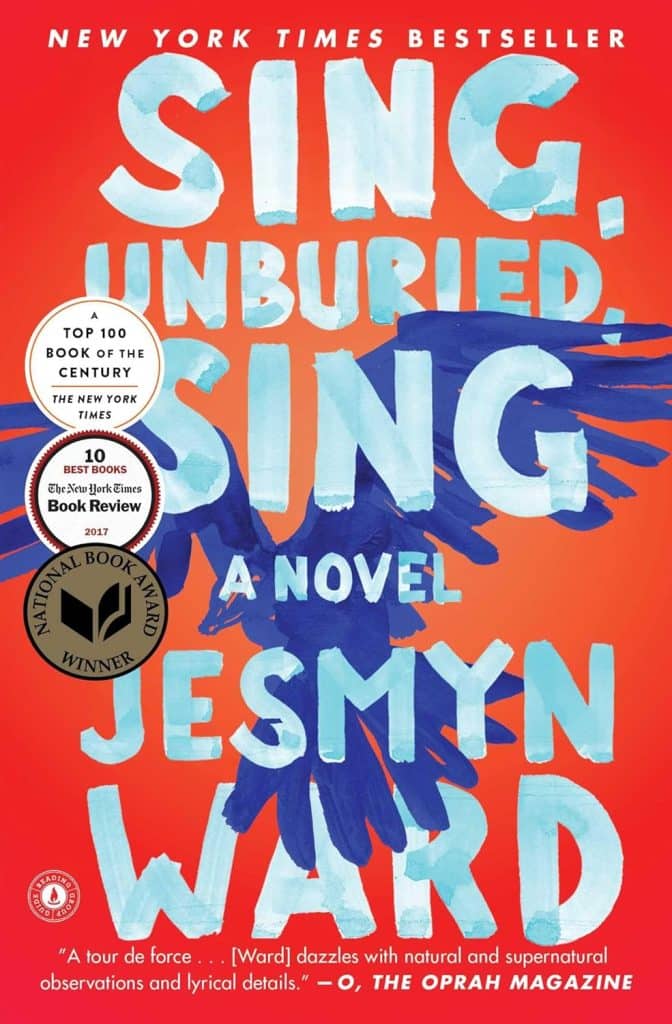
Sing, Unburied, Sing

Read: October 2024

Get this book

Sing, Unburied, Sing

by Jesmyn Ward

I started reading Jesmyn Ward‘s novel Sing, Unburied, Sing today. The New York Times selected it as one of the best books of the 21st century and awarded it the National Book Award. According to The New York Times, Jesmyn Ward‘s historic second National Book Award winner is “perfectly poised for the moment.” It’s an intimate portrait of three generations of a family and an epic tale of hope and struggle.

Jojo is thirteen years old and is trying to understand what it means to be a man. He has several father figures to learn from, including his Black grandfather, Pop. However, Jojo’s understanding is complicated by other men in his life: his absent White father, Michael, who is being released from prison; his absent White grandfather, Big Joseph, who refuses to acknowledge him; and the memories of his deceased uncle, Given, who died as a teenager.

His mother, Leonie, is inconsistent in her and her toddler daughter’s lives. She is a flawed mother in constant conflict with herself and those around her. She is Black, and her children’s father is White. She wants to be a better mother but struggles to prioritize her children over her own needs, particularly her drug use. Tormented and comforted by visions of her deceased brother, which only come to her when she’s high, Leonie is embattled in ways that reflect the harsh reality of her circumstances.

When their father is released from prison, Leonie takes her kids and a friend in her car and drives north to Mississippi and Parchman Farm, the State Penitentiary. At Parchman, there is another thirteen-year-old boy, the ghost of a deceased inmate who carries the ugly history of the South with him in his wanderings. With his supernatural presence, this ghostly figure also has something to teach Jojo about fathers and sons, legacies, violence, and love.

Described as a majestic and unforgettable family story, ‘Sing, Unburied, Sing‘ is rich with Ward‘s distinctive, lyrical language. As noted by The Philadelphia Inquirer, her unique narrative style takes readers on ‘an odyssey through rural Mississippi’s past and present.’

×

Discover more from Sharing Jan’s Love

Subscribe now to keep reading and get access to the full archive.

Continue reading