My Big Climb to Conquer Cancer on April 25, 2026

Estimated reading time: 3 minutes, 4 seconds

Blood Cancer United (BCU): CLIMB, CONQUER, CURE CANCER

Each year, I set out on a meaningful pilgrimage to the top of the One Gateway Center in Newark, a tribute to my beloved wife, Jan, and to everyone touched by the harsh reality of blood cancers. It’s staggering to think that every three minutes, someone in the U.S. receives a diagnosis of leukemia, lymphoma, or myeloma, and heartbreakingly, someone loses their fight every nine minutes.

My annual Big Climb is more than just a climb; it’s a powerful reminder of the resilience of those facing these illnesses and the love we hold for them in our hearts. By participating in the Big Climb, we not only raise funds but also create a meaningful opportunity for supporters like you to join us in the fight against blood cancer. Join me in making a difference and honoring those we’ve lost!
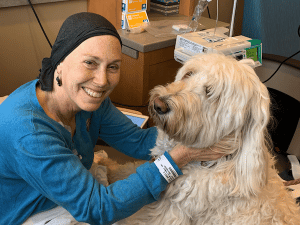
Jan’s courageous battle with blood diseases has profoundly impacted my life, igniting a passion within me to CLIMB, CONQUER, CURE CANCER!. I invite you to join me in this heartfelt mission. Together, we can unite our strength and transform hope into reality for countless individuals affected by these illnesses.

Your tax-deductible support directly fuels the Big Climb event, helping us cover costs and maximize funds raised for blood cancer research and patient support. Let’s make a difference together.

Last year, I set a fundraising goal of $3,000, and with the support of many, I raised an impressive $10,622. For 2026, my goal is $12,000! I have already contributed the first $1,500.

Every day, I challenge myself to walk more and engage in extra stair workouts in preparation for the Big Climb. Whenever I felt like giving up, I found strength in my wife’s story of struggle, which fueled my determination to keep going.

With each step, I remind myself of these words: CLIMB, CONQUER, CURE CANCER! My journey, filled with both highs and lows, is a testament to the resilience of the human spirit.

Please join me in making a difference! No matter the amount, your contribution can have a meaningful impact. As I do every year, I will match every donation made:

  • A $25 donation will be doubled to $50.
  • A $36 donation will be doubled to $72.
  • A $100 donation will be doubled to $200.
  • A $250 donation will be doubled to $500.

Given the recent cuts in federal funding for cancer research, your support has never been more crucial. Every donation helps us continue the fight against cancer and brings hope to those affected. Together, we can make a real difference!

By raising $12,000 in this year’s Big Climb, we can unlock a world of possibilities that will have a meaningful impact, including:

  • Funding a twelve-week research fellowship at BCU, where the fellow will be involved in groundbreaking research that could lead to significant advancements in the fight against blood cancers.
  • Enabling LLS researchers to isolate T-cells from the blood of twelve patients for a promising experimental immunotherapy clinical trial.
  • Covering twenty-four weeks of essential one-on-one and group support for families affected by blood cancer.

On behalf of blood cancer patients everywhere, I thank you for your support!

Blood Cancer United, formerly known as The Leukemia & Lymphoma Society, has played a significant role in advancing treatments that have improved survival rates for blood cancer patients over the years. Many therapies supported by Blood Cancer United not only benefit those with blood cancer but are also being used to treat patients with other types of cancers. For more information about Blood Cancer United, click here.


Contact Us
Subscribe

Creative Commons License

This work is licensed under a Creative Commons Attribution-NonCommercial 4.0 International License.


The Jan Lilien Education Fund!

The Second Mountain: The Quest for a Moral Life

Read: May 2019

Get this book

The Second Mountain: The Quest for a Moral Life

by David Brooks

The Second Mountain: The Quest for a Moral Life by David Brooks is a book I often recommend. Mr. Brooks writes about the first mountain that most people climb. The book challenges the reader to “live for a cause greater than themselves.”

It is about “to be a success, make your mark, experience personal happiness.” Even when they reach the top of the mountain, most people find they are unhappy. The climb to the summit has become unsatisfying.

On the second mountain, life moves from self-centered to other-centered.” Life becomes interdependent, not independent; it becomes a life of commitment, not about us.

Mr. Brooks “explores the four commitments that define a life of meaning and purpose: to a spouse and family, to a vocation, to a philosophy or faith, and to a community.

We live in a society, Brooks argues, that celebrates freedom, that tells us to be true to ourselves, at the expense of surrendering to a cause, rooting ourselves in a neighborhood, binding ourselves to others by social solidarity and love. We have taken individualism to the extreme—and in the process we have torn the social fabric in a thousand different ways.

When I read The Second Mountain, it became clear that Jan and I never even attempted to climb the first mountain. We were constantly climbing the second mountain.

We had chosen to do work that repaired the world; we both had a faith community and lived in a community.

All we were missing as far as commitments when we met was each other. Our love for each other provided the missing link and allowed us to climb to the top of the second mountain.


The Jan Lilien Education Fund sponsors ongoing sustainability and environmental awareness programs. Gifts made this month; I will match dollar-for-dollar. All donations are tax-deductible.

Subscribe

Contact Us

I receive a commission when you buy a book or product using a link on this page. Thank you for supporting Sharing Jan’s Love blog.

×
The Pull of the Stars

Read: June 2022

Get this book

The Pull of the Stars

by Emma Donoghue

After Jan’s death and over two years of COVID, The Pull of the Stars might not seem like a good read for me. But I had placed this book on my to-read list a few months ago.  The Pull of the Stars by Emma Donoghue is set in 1918 in Dublin; a maternity ward at the height of the Great Flu is a small world of work, risk, death, and unlooked-for love. It was a page-turner that engrossed me at that moment. When I reached the last page, I wanted the story to continue. 

The details about childbirth, life, and death were riveting. All three of the main characters are ones that I could have imagined in an episode of Call the Midwife. That Dr. Lynn was a natural person underscores the depth of Ms. Donoghue’s research and writing skills. 

Julie and Bridie’s characters were so real it was difficult to believe that they were not also based on natural persons. 

I strongly recommend The Pull of the Stars.

The Goodreads summary provides an overview.

In an Ireland ravaged by war and disease, Nurse Julia Power works at an understaffed hospital in the city center, where expectant mothers who have come down with the terrible new Flu are quarantined together. Into Julia’s regimented world step two outsiders—Doctor Kathleen Lynn, a rumored Rebel on the run from the police, and a young volunteer helper, Bridie Sweeney.

With tireless tenderness and humanity, carers and mothers somehow do their impossible work. In the darkness and intensity of this minor ward, these women change each other’s lives in unexpected ways over three days. They lose patients to this baffling pandemic but shepherd new life into a fearful world.

In The Pull of the Stars, Emma Donoghue again finds the light in the darkness in this new classic of hope and survival against all odds.


Subscribe

Contact Us

When you buy a book or product using a link on this page, I receive a commission. Thank you for supporting Sharing Jan’s Love blog.

×
How Democracies Die

Read: January 2021

Get this book

How Democracies Die: What History Reveals About Our Future

by Steven Levitsky and Daniel Ziblatt

How Democracies Die: What History Reveals About Our Future by Steven Levitsky and Daniel Ziblatt was on my reading list for almost a year. In late December of last year, I started reading it and was in the final chapter on January 6, 2021. Like many of us, I never in my life expected to see a day like that in our country.

This type of event is one the authors talk about in their book.

According to the overview in GoodReads,

Donald Trump’s presidency has raised a question that many of us never thought we’d be asking: Is our democracy in danger? Harvard professors Steven Levitsky and Daniel Ziblatt have spent more than twenty years studying the breakdown of democracies in Europe and Latin America, and they believe the answer is yes. Democracy no longer ends with a bang–in a revolution or military coup–but with a whimper: the slow, steady weakening of critical institutions, such as the judiciary and the press, and the gradual erosion of long-standing political norms. The good news is that there are several exit ramps on the road to authoritarianism. The bad news is that, by electing Trump, we have already passed the first one.

Drawing on decades of research and a wide range of historical and global examples, from 1930s Europe to contemporary Hungary, Turkey, and Venezuela, to the American South during Jim Crow, Levitsky and Ziblatt show how democracies die–and how ours can be saved.

Our democracy is too valuable for us to have it die. We all need to work to preserve and strengthen it. How Democracies Die is a book that everyone needs to read!

Subscribe

Contact Us

×
Rejection: Fiction

Read: December 2024

Get this book

Rejection: Fiction

by Tony Tulathimutte

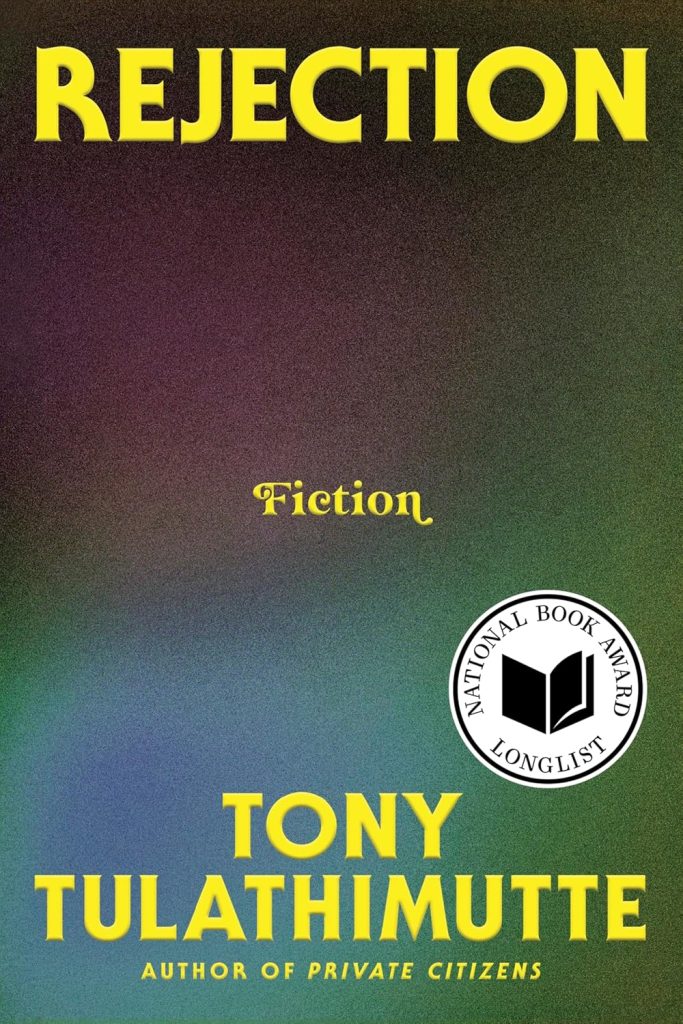
Today, I dove into Tony Tulathimutte‘s “Rejection: Fiction,” and I’m already captivated! This book was longlisted for the 2024 National Book Award in Fiction and named a New York Times Best Book of the Year. Tulathimutte, known for his award-winning work “Private Citizens,” weaves together a series of electrifying linked stories that keenly examine how rejection weaves its way into the lives and relationships of his deeply intertwined characters.

With sharp observations and outrageous humor, *Rejection* delves into the most sensitive issues of modern life. This collection of seven interconnected stories transitions smoothly between the personal crises of a complex cast of characters and the comic tragedies associated with sex, relationships, identity, and the internet.

In “The Feminist,” a young man’s passionate allyship turns into furious nihilism as he realizes, after thirty lonely years, that his efforts are not leading to romantic success or even getting laid; in “Pics,” a young woman’s unrequited crush spirals into obsession, systematically eroding her sense of self. “Ahegao; or, The Ballad of Sexual Repression,” depicts a shy late bloomer whose fumbling attempts at a first relationship result in a life-changing mistake. As these characters intersect through dating apps, social media feeds, dimly lit bars, and bedrooms, they reveal how our delusions can distort our desire for connection.

These brilliant satires examine the understated sorrows of rejection with a modern classic’s authority and a manifesto’s frenetic energy. Bold and unforgettable, Rejection is a striking mosaic that redefines what it means to face rejection from lovers, friends, society, and oneself.


When you purchase a book through one of my links, I earn a small commission that helps support my passion for reading. This contribution allows me to buy even more books to share with you, creating an incredible cycle of discovering great reads together! Your support truly makes a difference!


×
At the Villa Rose

Read: August 2022

Get this book

At the Villa Rose

by Major Alfred Edward Woodley Mason

At the Villa Rose by Major Alfred Edward Woodley Mason, initially published in 1910, is a mystery novel in which Major Mason introduced his French detective, Inspector Hanaud, who was an early template for Agatha Christie’s famous Hercule Poirot. Missing jewels, high adventure some one hundred and fifty kilometers from Geneva, a casino, and blind love are all factors in a complex case for Hanaud, which ultimately involves a gang of frightened murderers. If you enjoy deductive mysteries like me, I highly recommend At the Villa Rose.

The Goodreads summary,

In Aix les Bains during the early 20th century, Celia Harland, a beautiful (of course) young English girl down on her luck, is befriended by a wealthy widow, Madame Dauvray, an addict of “spiritualism,” and stages seances for her benefactrix, while knowing full well that the supposed manifestations from the spirit world are entirely bogus. This set-up supplies the opportunity for a criminal gang master-minded by Madame Dauvray’s maid, with their eyes on the widow’s jewelry collection, to engineer an introduction for one of their numbers, Adele Tacé (“Rossignol”), whose taunts of disbelief goad the old lady into allowing a seance to be held which, unsuspected by either Celia or her patron, will be the cover for murder and robbery.

The crux of the plot is that as a medium, Celia will be made their innocent victim, on whom suspicion is to be planted.


The Jan Lilien Education Fund sponsors ongoing sustainability and environmental awareness programs. All donations are tax-deductible.

Subscribe

Contact Us

I receive a commission when you buy a book or product using a link on this page. Thank you for supporting Sharing Jan’s Love blog.

×
A Sovereign People: The Crises of the 1790s and the Birth of American Nationalism

Read: February 2019

Get this book

A Sovereign People: The Crises of the 1790s and the Birth of American Nationalism

by Carol Berkin

A Sovereign People: The Crises of the 1790s and the Birth of American Nationalism by Carol Berkin, Presidential Professor American Colonial and Revolutionary History; Women’s History Professor at Baruch College, focuses on four crises in the first decade. Most historians view these are part of the early partisan debates in America.

Professor Berkin takes a different perspective. She focuses on how the Whiskey Rebellion, the Genet Affair, the XYZ Affair, and the Alien and Sedition Acts helped build nationalism. Despite the partisan divisions, both sides could find solutions that helped America survive its first decade. The failure to resolve anyone of these could have doomed America to failure.

The Federalists – Washington, Hamilton, and Adams – were the leaders of that first decade and managed the successive crisis of sovereignty.

A Sovereign People is one of four books from my first One Day University class.

Subscribe

Contact Us

×